In recent cognitive‑science discussions, a simple pastime—searching for concealed items in pictures—has emerged as a surprisingly effective way to sharpen visual perception. Whether a researcher uses it as a diagnostic tool or as a training aid, the evidence points to measurable gains in attention, pattern recognition, and memory for fine detail.
Why does hunting for hidden objects actually train the eye?
Visual perception relies on the brain’s ability to parse complex scenes, filter noise, and focus on subtle differences. When participants engage in a “spot‑the‑difference” task, the brain is forced to repeatedly shift attention between elements, detect anomalies, and encode spatial relationships. This active scanning mirrors everyday visual challenges: spotting a typo in a paragraph, detecting a defect on an industrial part, or locating a patient’s subtle skin lesion.
Studies in laboratory settings report that a 30‑minute session of hidden‑object searches improves visual search speed by up to 15 % and accuracy on subsequent tests. The effect appears strongest when the images vary in color complexity and when the target items are low‑contrast or embedded in cluttered backgrounds, forcing the observer to refine their filtering strategies.
What common mistakes reduce the efficacy of these exercises?
- Too simple or repetitive – Using identical image sets or low‑contrast targets can lead to rapid skill plateaus. Researchers who overlook this risk find that participants lose motivation before any measurable benefit emerges.
- Ignoring individual visual profiles – A one‑size‑fits‑all approach fails to account for differences in color vision, visual acuity, and working‑memory capacity. Without baseline screening, a task that is too easy for some or too hard for others can skew results.
- Skipping post‑task reflection – Many programs conclude abruptly after the search, missing an opportunity to debrief on strategies used. Reflection helps consolidate learning and transfer skills to new contexts.
Which smarter alternatives can boost outcomes?
- Adaptive difficulty algorithms – Software that escalates image complexity based on performance keeps participants in the “zone of proximal development.” A gradual increase in the number of hidden objects or the similarity between target and distractors maintains engagement and drives progress.
- Multimodal feedback – Combining visual search with auditory cues (e.g., a subtle tone when a target is found) engages cross‑modal attention pathways, which recent studies suggest can accelerate learning.
- Gamified leaderboards and timed challenges – Introducing a competitive element can motivate frequent practice. However, researchers should monitor whether speed trumps accuracy, as the goal is perceptual acuity, not merely rapid clicking.
- Real‑world application sessions – Integrating hidden‑object tasks into domain‑specific imagery—such as radiographs, satellite maps, or manufacturing inspections—helps transfer the skill to the participant’s professional workflow.
How can a detail‑oriented researcher implement a reliable protocol?
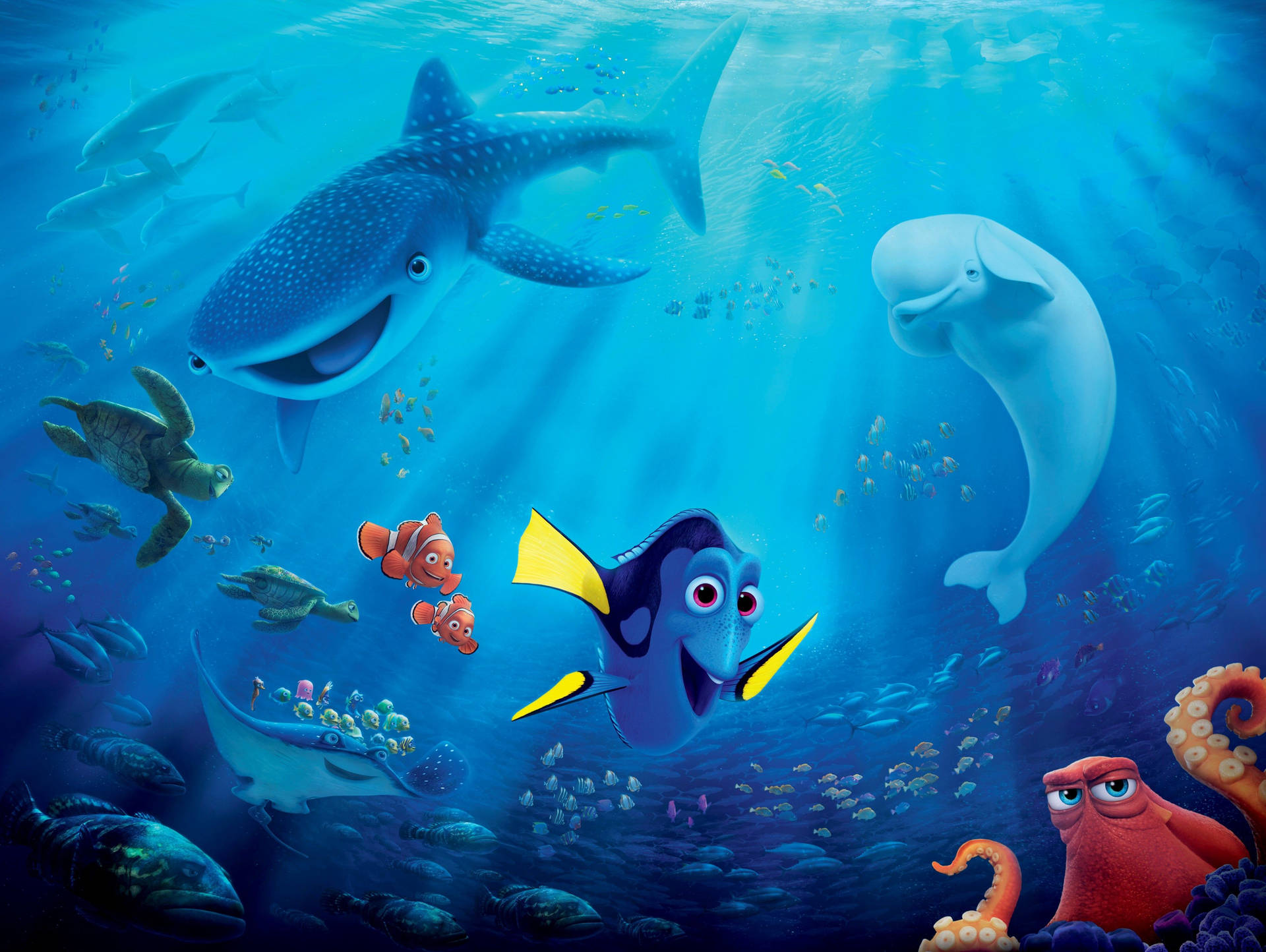
Begin by selecting a balanced image library. The provided Finding Hidden Objects image set can be a starting point. For instance, a vibrant underwater scene from a Finding Nemo wallpaper (image 1) offers high color contrast and multiple layers of texture, ideal for early training rounds.
Structure each session with a pre‑test to establish baseline visual search speed and accuracy. During the task, vary image type (photographs, diagrams, synthetic patterns) and target complexity. After each round, record not only success rates but also search strategies—do participants scan systematically, jump to focal points, or rely on random saccades? Use this data to tailor subsequent difficulty levels.
Finally, schedule periodic retention tests weeks apart to assess long‑term gains. A researcher who sees a 10‑ to 20‑% improvement in detection speed on untrained images can confidently claim that the hidden‑object exercise enhances general visual perception.
What broader implications could this have for training programs?
Beyond laboratory settings, industries that depend on meticulous visual inspection—such as aerospace, healthcare, and quality assurance—could adopt these tasks as low‑cost, scalable training modules. By embedding hidden‑object searches into existing e‑learning platforms, companies can offer employees a daily micro‑practice routine that boosts visual acuity without disrupting workflow.
In an era where automation increasingly handles routine detection, the human eye remains essential for nuanced judgments. Structured hidden‑object exercises provide a proven, evidence‑based method to keep those perceptual skills sharp.
As researchers continue to refine these methodologies, the convergence of cognitive science and practical training promises to elevate visual performance across a spectrum of professional fields.
Finding Nemo Images Finding Nemo Finding Nemo 2003 Finding Nemo 2003

Finding Nemo Images Finding Nemo Finding Nemo 2003 Finding Nemo 2003
New Finding Dory Character Photos: Loons, Otters & More

New Finding Dory Character Photos: Loons, Otters & More
How Fact-Finding And Disciplinary Investigations Differ - Wise

How Fact-Finding and Disciplinary Investigations Differ - Wise ...
Top 999+ Finding Nemo Wallpaper Full HD, 4K Free To Use

Top 999+ Finding Nemo Wallpaper Full HD, 4K Free to Use